

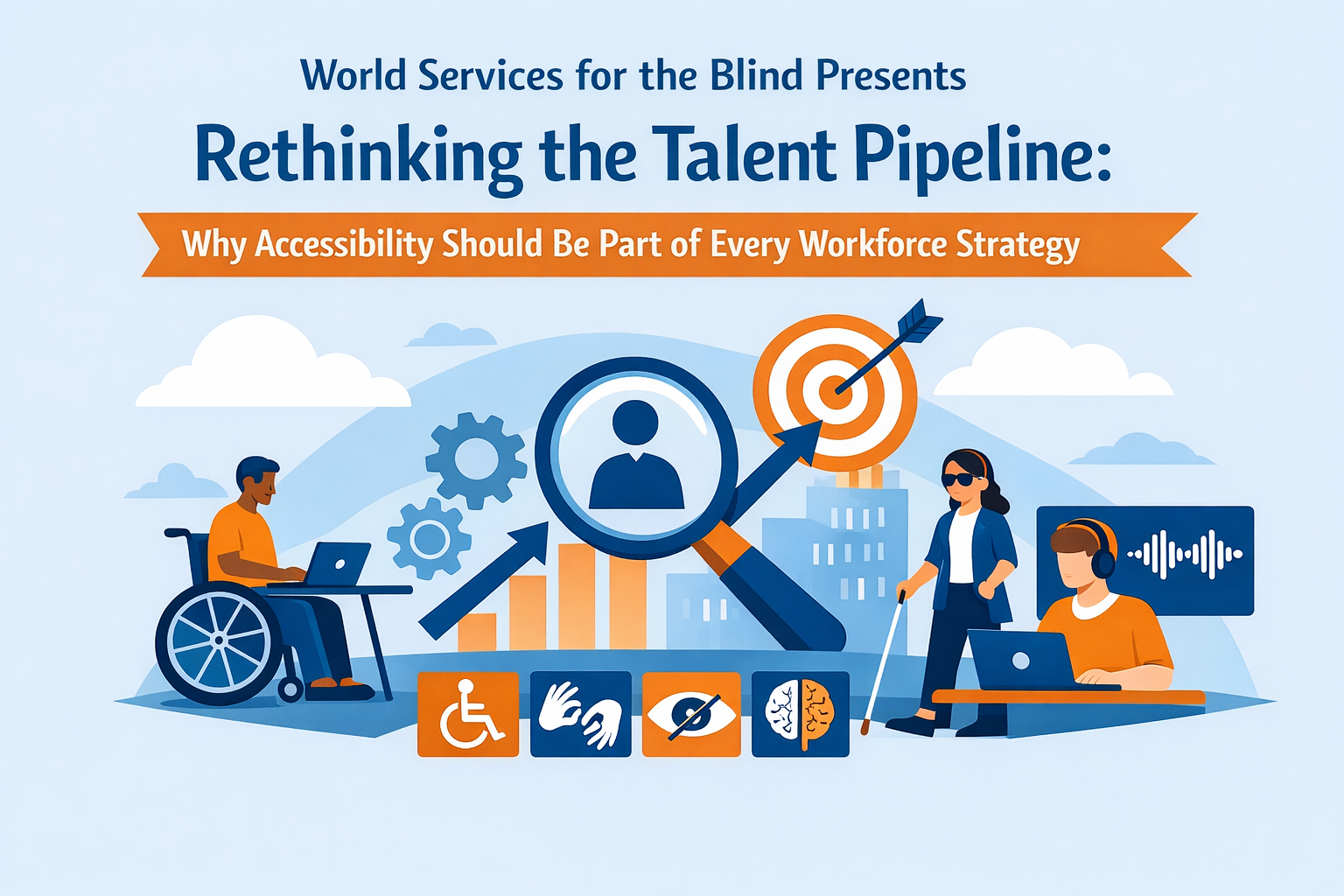
Rethinking the Talent Pipeline: Why Accessibility Should Be Part of Every Workforce Strategy
/
Written by Guest Catherine Upshaw, Employability Specialist at WSB
From manufacturing to IT, the future of skilled work depends on how willing we are to include all capable talent and more importantly how ready we are to invest in our homegrown assets.
Across industries today, one concern continues to surface: there aren’t enough skilled workers to meet demand.
What if part of the solution has been over looked and simply right in front of us all along?
In Arkansas alone, there are more than 70,000 blind citizens, and over 70% are unemployed. Nationally, that number remains stubbornly high year after year. The issue isn’t a lack of ability it’s a lack of accessibility, awareness, and opportunity.
World Services for the Blind, knows firsthand how much potential exists within the blind and visually impaired community. We’ve utilized it every day for over 75 years of operation. Individuals are earning certifications, mastering assistive technology, and preparing for careers across diverse fields, including IT, customer service, manufacturing, logistics, finance, STEM and beyond.
But we need more.
We need more blind professionals in the workforce.
We need more perspectives in STEM, government, and education.
We can’t move forward if we don’t create space for those voices.
Blind professionals bring strengths that every industry needs: problem-solving, adaptability, persistence, and creativity in how they navigate the world. When employers make their hiring processes accessible and commit to inclusive practices, they gain not only skilled workers but innovative thinkers who strengthen teams and reshape workplace culture.
Our previous webinar, “How to Overcome the Lack of Employment for the Blind and Visually Impaired,” (Watch Here) brought this conversation forward. Together with blind professionals serving as guest panelists, we explored:
What barriers exist and how to remove them.
How both job seekers and employers can build efficient, inclusive paths to employment.
Real-life stories of individuals who found success and self-advocacy through training and opportunity.
The resources and partnerships that can help close the 70% unemployment gap.
If your industry is struggling to find skilled workers, maybe it’s time to widen the view of who belongs in your workforce.
Accessibility isn’t charity but it’s equity. It’s talent development and it’s the key to unlocking a broader, more capable workforce for everyone.