10 Things You Should Know About Guide Dogs | Guide Dog Awareness Month

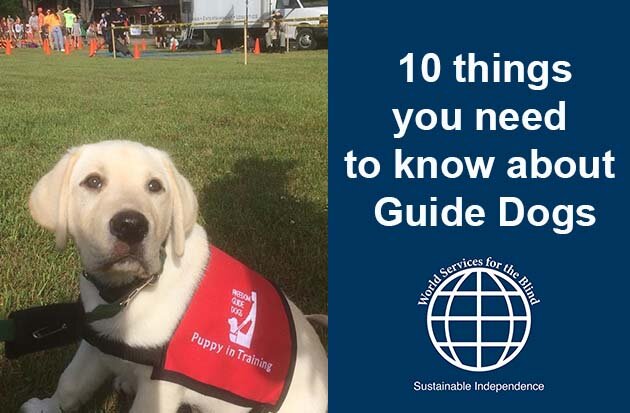
guide dog puppy in training with red vest with white text “10 things you need to know about Guide Dogs” with WSB logo underneath, a globe image with World Services for the Blind wrapped around

10 things you should know about Guide Dogs


September is Guide Dog Awareness Month. With that, we wanted to share 10 things you should know about guide dogs whether you are thinking of getting one or just interested in these amazing animals!

1.     History of Guide Dogs

Service dogs go all the way back to the 16th century! The first guide dog training school was created in Germany to assist veterans returning from WW1. In 1929, the first Guide Dog school in the United States, the Seeing Eye, was established. Since then, there are so many different guide dog schools across the world!

2.     There are many different Guide Dog Schools

As mentioned in #1, there are so many different schools to choose from! Every school has different training philosophies so choosing a school can depend on what kind of training systems you are looking for. Schools can also differ in ownerships of the dog or even vet bills. There are Guide Dog schools all over the country from Leader Dogs in Michigan to Guide Dogs of America in California! You are sure to find one in the location you are looking for.  There are even some schools that will bring the training to you!

3.     Do not pet a dog in harness

Perhaps the most important thing to know about guide dogs is to not pet them while they are in harness! Guide dogs are providing an invaluable service to their handlers by being their eyes! Guide dogs are trained to ignore distractions, but that means if you see someone with a guide dog you should not pet them while in harness.  

three dogs sitting looking at the camera. dog on the left is a pet and chocolate color. the dogs to the right are guide dogs, one a black lab and one a yellow lab.

three dogs sitting looking at the camera. dog on the left is a pet and chocolate color. the dogs to the right are guide dogs, one a black lab and one a yellow lab.

4.     Guide dogs are just dogs after all

When a dog is not working however; that is a different story! When off harness, guide dogs are just like regular dogs. They love to play, run around, and get attention from people!

5.     Guide dogs are not a GPS!

A common misconception is that guide dogs are like GPS’s and they know when to cross the street. This is not true. Guide dogs are trained to guide so that their handlers miss obstacles, stay in a straight line, or navigate crowds. The handler decides when to cross a street and which direction to go. But there is something called Safety Disobedience that we discussed in our blog post if a guide dog is right for you! Safety Disobedience allows the dog to decide if it is not safe to cross a street and will disobey the handlers commands.

6.     They can go (almost) anywhere in the United States

With some very few exceptions, like a zoo, guide dogs are allowed in every public area! Thanks to the ADA, guide dogs are able to go to any establishment including restaurants, stores, public transportation, ride share services, airplanes, and anywhere a handler may go.  

7.     Emotional Support Animals are very different

Guide dogs go through years of training and cost over $40,000 to train. Guide Dogs begin training as young puppies and are given to handlers when they are around two years old. While on the other hand, emotional support animals are not certified and oftentimes, do not have any training. 

8.     Guide dogs are matched specifically with their handler

This goes back to the point about the extensive amount of training a guide dog receives, they are also matched specifically with their handler based on their lifestyle and their walking speed/gate.

9.     Most common Breeds

The most common guide dog Breeds are labs, golden retrievers, and German Shepherds. Some schools also train standard poodles if a handler is allergic!  

10.  Bring a sense of independence

Guide dogs bring a tremendous level of independence for their handlers. There are so many reasons one may get a guide dog but one reason we hear over again is the sense of independence a dog brings to the blind individual.

(Photos Courtesy of Sharon Giovinazzo, CEO & President)  

Follow WSB on Social Media!

Facebook | Twitter | Instagram  

Misconceptions about the Blind and Visually Impaired DEBUNKED!  

Blindness and visual impairment is a low incidental disability. It is only about 3% of the population. And with that, there are a lot of misconceptions about those who are blind and visually impaired. Today we’re debunking them!

These assumptions are all FALSE and we are here to tell you why!

1.     Blind people don’t work

We wanted to highlight this one first because this is exactly what WSB is proving INCORRECT! While the unemployment rate is 70% for those who are blind and visually impaired, WSB is actively working on breaking that barrier. For those who complete our career training programs, we have an 80% employment rate! There are some great reasons to hire an employee who has a disability.

2.     Blind people don’t use computers

Another important FALSE assumption! There is so much great technology out there that those who are blind and visually impaired from screen readers (JAWS, NVDA) to magnification software. On Apple products, the accessibility is built right in so you don’t even have to download anything extra to use VoiceOver or zoom features!

3.     Guide Dogs know when to cross the street

This is a common misconception. But guide dogs do not know when to cross the street but rather let the handler lead. They do, however, use something called Safety Disobedience. Safety Disobedience means that if the dog deems it is not safe to cross the street, they will stop the handler. You can read more about safety disobedience on our blog post here.

4.     Blind people can’t be put together

There are so many great tips and tricks to looking put together even if you are visually impaired or blind! From color identifiers to apps like Be My Eyes, there are plenty of ways to pick out clothing, put on makeup, do your hair, etc.

5.     Every blind person sees complete darkness

Another common misconception but blindness is a wide spectrum. In fact, most people who are considered blind do not see complete darkness. The definition for legal blindness (in the United States) is that with correction your vision is 20/200 or less or your visual field is less than 20 degrees. This means there is a wide range of visual acuity and still be considered legally blind and blind.

6.     Every blind and visually impaired person uses a cane

While a lot of us use canes, not everyone does! As the above misconception pointed out, blindness is a spectrum. There are also different kinds of canes than just the traditional mobility cane you might see. ID canes are smaller and more compact. They are used to let the public know that the person using it is visually impaired but they may not need to use a mobility cane.

7.     You have to speak loudly to a person who is blind

We don’t need you to speak loudly for us to know you’re addressing us. Instead, introduce who you are and you can speak how you would normally.

8.     Blind people need assistance to the bathroom

This is a big one we are faced with whether it’s starting a new job, at the airport, or just living our lives. And one that is a complete misconception! It comes as a shock to people, but we are capable of going places by ourselves and independently!

9.     Assuming everything online is accessible

Accessibility is probably not even an afterthought for most able-bodied people out there, but it is so important for inclusivity. We wrote a whole post on how to make your social media accessible. It is a lot easier than you would think.

10.  Blind people are so different from those who are able-bodied

While our vision and the way we may experience the world are different, we are just like everyone else. We want to highlight that blind people can do anything able-bodied people can (besides driving… yet!). We can do great things like running marathons, starting businesses, and leading fulfilled happy lives. And as we’ve highlighted before, there are some major perks of being blind or visually impaired!

What misconceptions do you want to debunk? Let us know in the comments!


Interview with Chris Peterson from Penny Forward! | HOPE Blog Series

headshot of Chris with blue background and white text “hope wsb blog series | interview with chris peterson from Penny Forward

headshot of Chris with blue background and white text “hope wsb blog series | interview with chris peterson from Penny Forward

Welcome to our second installment of the WSB blog HOPE (Hanging Onto Positive Expectation) series! There are so many individuals doing great things for the Blind and Visually Impaired Community that we wanted to highlight and share their stories. We hope these stories can also serve as inspiration for those with vision loss and to remind us that there are so many people working towards a common goal of helping those who are blind and visually impaired.

At WSB, we know the importance of financial literacy and independence and that’s why we are so excited about this month’s guest! This month we are featuring Chris Peterson, the founder of Penny Forward! Penny Forward is a resource for the blind and visually impaired to gain financial literacy. 

Chris was born blind but that hasn’t stopped him from achieving his dreams and goals. Growing up the expectation for Chris was that “[he] was going to be successful, that [he] was going to the same things that every other kid did, and that [he] was going to take care of [himself] as much as any other kid [his] age would take care of”. He also grew up with a sister with the same eye condition, so being around blindness was the norm for him. Chris graduated high school and received his Bachelor’s degree in Computer Science from Southwest Minnesota State University. He worked for IBM and then went on to receive his Master’s in Software Engineering, and currently works remotely.

In 2020, Chris started Penny Forward. Chris describes Penny Forward as “a community of who are blind and visually impaired and their families who share an interest in financial independence”. The mission of Penny Forward is to help blind people build the knowledge to confidently navigate the complicated landscape of personal finance through education, mentoring, and mutual support.

Chris knows that financial Literacy can be overwhelming, especially because many people were not been taught everything growing up. Chris is even self-taught in his Financial Literacy education but is currently pursuing certifications to take Penny Forward to the next level. He explains the goal of Penny Forward as “We're developing a group and one-on-one financial education programs that help people to understand how money works to the point where they feel confident enough to put together a personal budget if that works for them, open bank accounts to help to organize their finances better, apply for loans, talk to a financial advisor if they're ready to start investing, or even thinking about things like life insurance or long term care insurance”

­­While Penny Forward only began last year, Chris has been able to have some big names on the podcast from  Rehabilitation Counselings working in the field to our very own, Director of Education and Training, Eric Yarberry! He often has guests who have built a career for themselves as blind and visually impaired individuals to show that financial literacy is possible. He has a lot of plans in the works as well, from bringing on financial advisors and people who are not in the disability space. With Penny Forward, Chris wants to show that those in the disability community “want to and can do the same things just like everybody else” He wants to give those in the blind and visually impaired the confidence to work with Financial Advisors, loan officers, etc. who they may not have the confidence to do otherwise.

We want to thank Chris for being a part of our series, HOPE, and we hope you spend some time on Penny Forward!

Be sure to follow WSB on social media!

Facebook | Twitter | Instagram  

Employment Barriers for the Blind and Visually Impaired

overhead shot of people working at a large conference table with notes and computers. Blue box with white text “Employment Barriers for the Blind and Visually Impaired by World Services for the Blind” with the WSB logo underneath

overhead shot of people working at a large conference table with notes and computers. Blue box with white text “Employment Barriers for the Blind and Visually Impaired by World Services for the Blind” with the WSB logo underneath

Employment Barriers for the Blind & Visually Impaired


Employment Barriers for the blind and visually impaired can range from a wide variety of reasons from lack of transportation to negative attitudes from employers. It is no secret that the unemployment rate for the blind and visually impaired is higher than the average population, even within the disability community. With the unemployment rate for the blind and visually impaired at over 70%, there are so many barriers that can attribute to this number that can feel vast and overwhelming. But that is exactly why World Services for the Blind does what we do! We even have an 85% employment rate for graduates of our career training programs. In this blog post, we wanted to share some of the top employment barriers for the blind and visually impaired and how to overcome them. We also recently put out an employment barriers survey that we are excited to share the results! In this post, we also share some tips if you are an employer.

Transportation

100% of participants in our Employment Barriers survey found transportation to work to be a barrier when they are trying to find employment. Oftentimes, those who are visually impaired and blind work in areas where it might be difficult to catch a bus/train, and Paratransit may not run in rural areas. Employers also may not be understanding that an employee takes public transportation and they may be a few minutes late/early.

Lack of Training

Not only is the need for reliable transportation an issue, but the need for self-efficacy training, meaning those who are blind and visually impaired need to feel confident in their abilities to navigate transportation. This can be more difficult for those who have lost their vision later in life as opposed to those who have been blind or visually impaired their entire lives or since childhood.

Negative Attitudes from Employers

Even if transportation and self-efficacy are not an issue, employers are often skeptical of how someone who does not drive will get to work. This can happen before someone even goes in for an interview.

One participant in our survey noted that he was questioned about how he would get to work in the interview. He made the point  “If I didn’t have [my transportation] figured out before I walked in the door, I would not be in the interview”.

Another participant said that a secretary told the interviewee she needed a car for the position, which was not the case nor was it stated in the interview process.

These negative attitudes come from a lack of education and understanding about the blind and visually impaired community.

Lack of Workplace Accommodations

Negative attitudes from employers can cause those who need accommodations to not ask for them out of fear. Without the proper accommodations, those who are blind and visually impaired are not able to do their job effectively.

What employers don’t realize is that accommodations for those with disabilities can cost the company almost nothing! According to the Job accommodations Network,  the average cost for accommodations is $500 (much of which can be covered in other ways, not by the employer!).

One reason for this may be that blindness and vision impairment is a low incidental disability and employers do not know how to accommodate them nor do they realize all of the assistive technology that can allow a person to do the job.

What can I do as a blind and visually impaired individual?

The first step is gaining the life and employable skills you need to maintain a job. This can include life skills training or even joining one of our career training programs.

These barriers can seem intimidating but don’t let them get you down! We know that as someone in the blind and visually impaired community, you have to work five times harder than those who apply who are able-bodied but WSB offers industry-standard certifications, workplace readiness training, an environment that fosters time management and soft skills, WSB also works with our graduates to secure internships, as these are so important in gaining employment, especially as someone who is blind and visually impaired. Internships allow employers to see what a WSB graduate can bring to the workplace and are a great way to get your foot in the door.

What can I do as an employer?

Employers can do a lot to help mitigate these barriers. The most important being education. Don’t make assumptions on what a person with a disability can do or what they need. Make sure to ask if there are any accommodations that can be made or that they need. And believe it or not, the blind and visually impaired know how to use a computer without sight! There are many resources available but one of the best is the Job Accommodations Network. It lists all kinds of accommodations for all kinds of disabilities.

Another important aspect is to make sure your application is accessible! This can easily be done by providing an accessible form online or by allowing potential candidates to email their resumes and cover letters if the application portal is not accessible.

Once hired, make sure your workplace is accessible (we have a whole blog post on how to do that!).

If you are ready to hire a great new member of your team, be sure to check out our page on how to Hire a WSB graduate.


 Be sure to follow WSB on social media!

Facebook | Twitter | Instagram

Interview with Chaz Davis | New Blog Series - HOPE! Holding Onto Positive Expectations

HOPE (Hanging Onto Positive Expectations) Series – Interview With Chaz Davis


WSB is very excited to announce our new series on the blog – HOPE (Hanging onto Positive Expectations)! There are so many individuals doing great things for the Blind and Visually Impaired Community that we wanted to highlight and share their story. We hope these stories can also serve as inspiration for those with vision loss and to remind us that there are so many people working towards a common goal of helping those who are blind and visually impaired. We also want to highlight ways to get involved in the blind & visually impaired community that you might not know about.

Our first interview is with Chaz Davis. If you’re involved in the BVI running community, you’ve probably heard of him. And if not, we got some great tips from Chaz on how to get involved in the running community, no matter your skill level (or even if you just enjoy walking!).

Chaz Davis is a Paralympian, assisted in founding United in Stride (a website that can help pair guided runners with BVI runners/walkers), and currently works for the Massachusetts Association for the Blind & Visually Impaired.

But Davis’ vision loss story is not unlike many clients we see at WSB. Davis began losing his vision in college, where he ran Division I track competitively. After he began losing his vision though, he “fell into a dark depression,” but only eight months after his vision loss, he was able to begin running again on a treadmill. Davis was lucky; he had a support system of friends and family that helped him through this period of his life. His former track teammates began guiding him, while not really knowing what they were doing. “It just became second nature that I could run with them as my teammates, but they would also guide me and it just wasn't a big deal”, Chaz recalls.

But Davis is no stranger to the difficulties of losing your sight later in life. He spent time at a residential training center and was able to surround himself with other blind and visually impaired individuals who were going through the same thing. Chaz noted, “I think I think if you surround yourself with blind people that have been successful, and you know reach out to other people for help, that's not a sign of dependence but can really lead to more independence”.

In 2015, United In Stride was founded with the help of MABVI. Because of United In Stride, Davis has been able to train, qualify, and place for the Paralympics!

What is United in Stride?

United In Stride is a website designed to unite blind and visually impaired runners with sighted guides across the country. United In Stride allows running and access to training to no longer be an obstacle in someone’s life. They currently have over 4,600 members, with more guides than blind and visually impaired runners so you are sure to find someone to help out! United In Stride is also a great resource for those in rural areas because a guide may be able to travel a little farther out and meet you.

With United In Stride, you can put your pace time (or you may not know and that’s okay too!) and how many miles you want to run or walk.  

“It's a common misconception that the guide runners are really giving back a lot, which they are, but I found that with a lot of guide runners, it's really a mutual benefit. They love that connection and being able to you know help a blind runner do something that otherwise.”

Davis suggests if you are really excited about running or walking with someone, to find a few different guides, as people have their own lives, and finding someone to run once a week is a good way to start out.

Davis also knows running can be intimidating to people who have never tried it before, especially in the blind and visually impaired community. For anyone who may feel intimidated by running, he said to start small. Even if it is starting out by walking half a mile or a mile every day or even three times a week, that is a great start. He made sure to note that “running is all relative” so you can start whenever you need to in order to be safe and comfortable. Similar to vision loss, setting attainable goals is so important when you start out.

Davis’ also pointed out that if you have good Orientation and Mobility skills (we can help you with that!), then you can start walking by yourself to build some stamina. But United in Stride is still a great resource if you want some company or want to start building up to running.

United In Stride has so many great resources on their website as well, including a Couch to 5k training program. So you can start from no physical activity and train for a 5k!

Davis also gave some great tips on how to stay safe using United In Stride. Make sure that you meet in a public place during the day, as you don’t really know who you are meeting at first. 


Thank you to Chaz Davis for joining us as our first HOPE interview! If you would like to be considered for an interview or would like to write a guest blog post, please contact lrogers@wsblind.org

Follow WSB on Social Media!

Be sure to follow WSB on social media!

Facebook | Twitter | Instagram  


5 Inspiring Women in History who were Blind and Visually Impaired

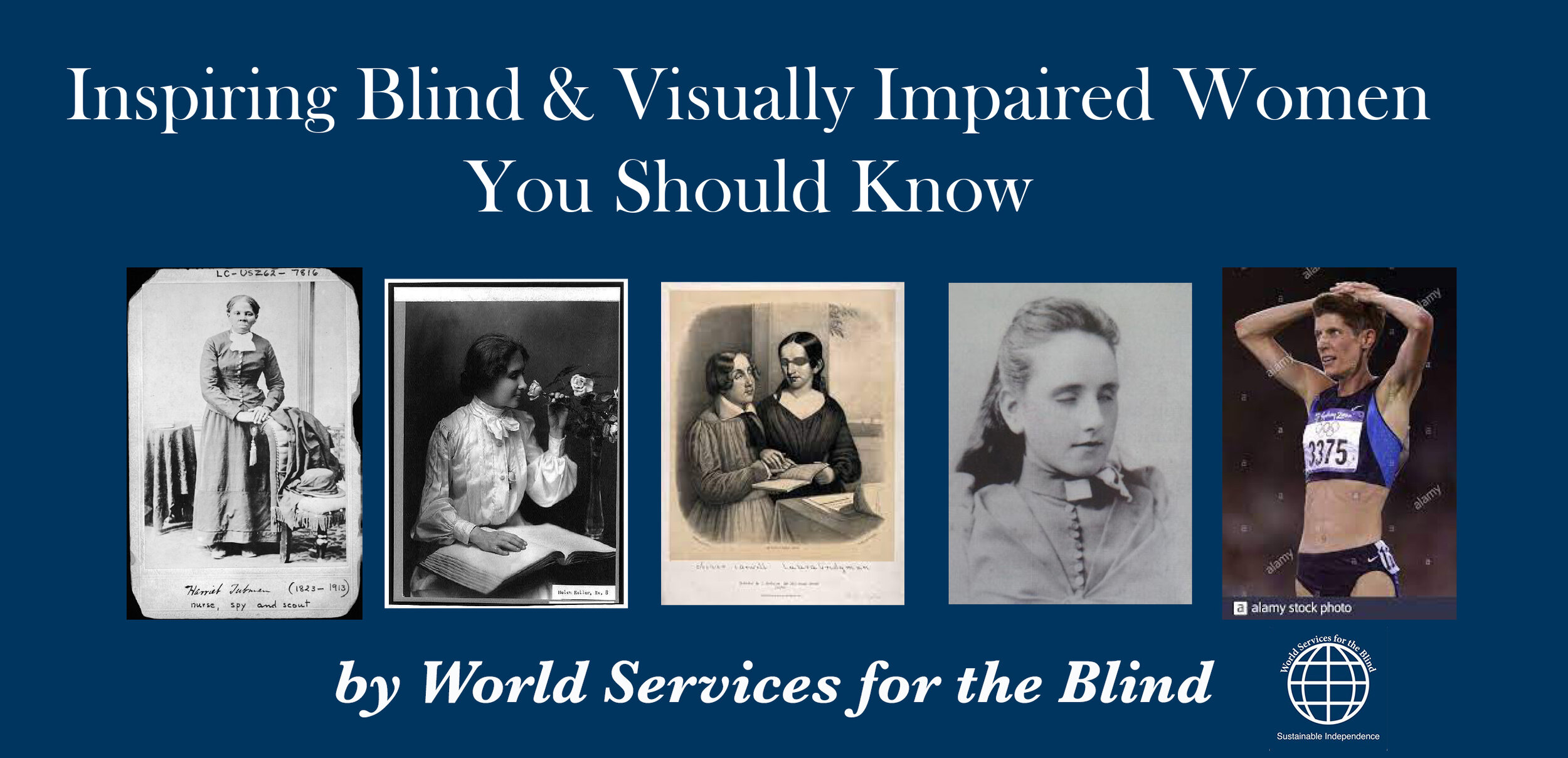
Blue background with white text “Inspiring Blind & Visually Impaired Women You Should know by World Services for the blind” with images of historical photographs of five women

Blue background with white text “Inspiring Blind & Visually Impaired Women You Should know by World Services for the blind” with images of historical photographs of five women

Women in History: 5 Inspiring Women who were Blind & Visually Impaired

In honor of Women’s history month, we are sharing some amazing women in history who also happen to be blind and visually impaired! From disability advocates to athletes, we cover a wide range of women who have changed history for the better, and also happen to be blind or visually impaired!


1.     Helen Keller

Most people think of Helen Keller when they think of amazing women who are blind. After all, Helen Keller is known as one of the most influential deaf-blind disability advocates. With the help of her teacher, Anne Sullivan, Keller was able to communicate effectively and graduate college in 1904. Keller was an amazing author, writing 14 books. This included the autobiography of her life, which was later turned into a play. Keller worked her adult life as an advocate for those with disabilities, advocating for education, voting rights, and more.


2.     Laura Bridgman

Laura Bridgerman is considered the first deaf-blind woman to gain an education in English, even before Helen Keller! She went to school at the Perkins School for the Blind, learning braille, math, writing, philosophy, and more. She even was written about by Charles Dickens!


3.     Harriet Tubman

Everyone has heard of Harriet Tubman and her amazing work to free over 300 slaves. But did you know she was also visually impaired? Tubman suffered a severe wound to her head, inflicted by a slave owner, leaving her visually impaired and with seizures. Despite these challenges, Tubman led the Underground Railroad and helped over 300 slaves to freedom!


4.     Tilly Aston

Tilly Aston is an international leader in blindness education and disability advocacy. Aston was the first blind teacher in Australia, focusing on braille. She created the Victorian Braille Library. In 1913 she became the first head of school for the Victoria School for the Blind. Aston was a huge advocate for the blind, including advocacy for the right to vote, free public transportation for the blind, and government pensions for the legally blind.


5.     Marla Runyan

A more contemporary woman in history, but one we had to feature! Runyan is a legally blind track and field, road runner, and marathon athlete. Runyan has won numerous medals in her track and field endeavors from multiple gold metals in the Paralympics to finishing as the top American in the New York City Marathon in 2002. Runyan is the only visually impaired athlete to compete in the Paralympics and the Olympics.


 If you have any topics you would like us to cover on the blog, please email Lee rogers at lrogers@wsbling.org

How to Make Your Workplace Accessible for the Blind and Visually Impaired

overview shot of an office space with white text “how to make your workplace accessible for the blind and visually impaired” by world services for the blind with WSB logo

overview shot of an office space with white text “how to make your workplace accessible for the blind and visually impaired” by world services for the blind with WSB logo

How to make your workplace accessible for the blind and visually impaired

Accessibility in the workplace may seem intimidating but there are so many ways an employer can make the workplace accessible for the blind and visually impaired. With a focus on diversity and inclusion in the workplace, accessibility for those with disabilities cannot be ignored. Hiring those with disabilities can also provide tremendous benefits for your company. 70% of working-age adults who are blind or visually impaired are unemployed, meaning there is a huge talent pool you may not even be considering! Those with disabilities also provide unique and diverse perspectives, are problem-solvers, and great assets to any company.

 But as an employer, you might not know where to start or how to help your employees who need accommodations. And you might think they will be expensive, but that is incorrect. Over 50% of accommodations cost next to nothing and most cost less than $500, according to the Job Accommodation Network.

Offer Support

If an employee brings up that they have a disability (which they are not required to when they apply!), be supportive. Make sure to ask if there is anything you can do to help accommodate them, and if they have ideas, listen!

Work from Home Option / Flexible Scheduling

For employees who are not blind and visually impaired, they can simply get in a car and drive to work. This is not the case for the blind and visually impaired community! Allowing for a more flexible schedule or even working from home will give employees the benefit of not struggling through a commute or worrying they will be a few minutes late because of a late bus or paratransit. Again, be understanding and supportive about public transit running late.

Make Social Media and Website accessible

Making your website and social media accessible is so important to show your employees that you care about accessibility all around, not just as a one-off occurrence because of them. You’ll also be helping people who do not work at your company by providing an accessible website and social media.

Offer documents in digital formats & accessible PDFs

Forms can easily be made fillable with programs like InDesign and Adobe Acrobat. When making fillable PDFs, make sure to add tags so that they are read when screen readers access the form. For more tips and tricks, visit this webpage on how to make accessible documents using Acrobat.

Don’t make assumptions

This goes back to our first point but do not make assumptions about your employees and what they can do. This is especially important in the interview phase. The Blind and visually impaired community is able to do almost any task, as long as it doesn’t include driving! Simply ask and make sure they have the tools they need to succeed.  

If you are blind or visually impaired, check out the Job Accommodations Network

If you need help with accommodations at the workplace, be sure to check out the Job Accommodations Network. JAN can give you some great resources and ideas if you are struggling at work.  


If you have any questions or would be interested in writing a guest post, please contact Lee Rogers, Communications Manager, at lrogers@wsblind.org